
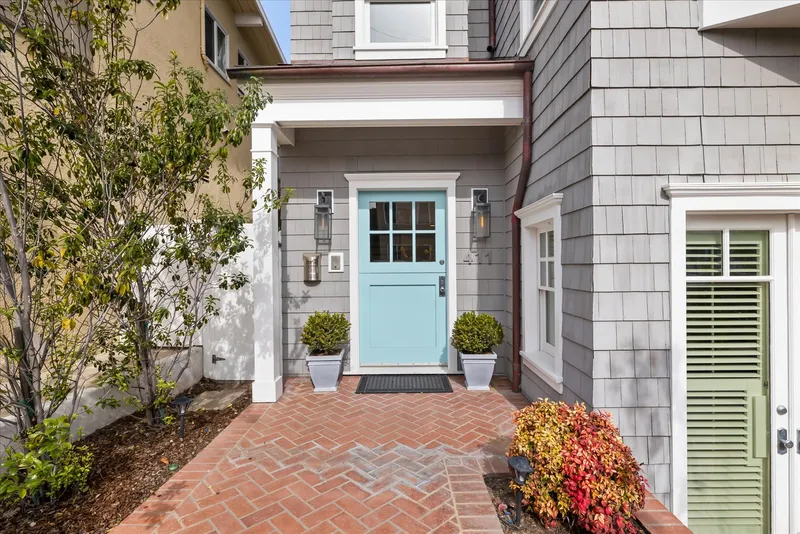
If you bought in the Tree Section fifteen years ago, you’re sitting on some of the best-performing real estate in the South Bay. If you’re looking now, you’re asking the right question: is there still room to run? The answer — with context — is yes, and here’s why.
What Changed and Why It Matters
The Tree Section wasn’t always the neighborhood it is today. For years it was the “affordable” part of Manhattan Beach — which, in context, meant homes that hadn’t yet been updated and land that hadn’t been priced to its potential. That era is effectively over.
What happened was a sustained wave of renovation and new construction that rewrote the block-by-block character of the section. Buyers who came for the value discovered the fundamentals — large lots, excellent schools, flat walkable streets with no traffic cut-through — and they stayed. Builders followed. The section that once felt like it needed to apologize for not being the Sand Section stopped making that comparison entirely.
The Tree Section now stands on its own terms: a neighborhood of mature trees, wide streets, architectural variety, and some of the largest lots in the flat part of Manhattan Beach.
The Structural Appreciation Drivers
Lot size premium. Tree Section lots run larger than Sand Section lots — commonly 3,300–4,000+ sq ft, with some parcels considerably bigger. In a built-out city where you can’t create more land, larger lots compound in value over time.
MBUSD school quality. Manhattan Beach schools are among the top-performing public schools in California. Families who want elite public education without private school tuition treat the Tree Section as a near-mandatory target. That demand floor is durable and consistent across market cycles.
The renovation premium is still uncaptured on some blocks. Not every home in the Tree Section has been updated. Cosmetically dated homes still exist, and they trade at discounts to their renovated neighbors — meaning the appreciation upside remains available to the right buyer.
No ocean pricing ceiling. Counterintuitively, the absence of beachfront pricing in the Tree Section is a feature for appreciation math. Sand Section hits hard ceilings at the Strand; Tree Section comparables have more room to move as demand for flat MB expands.
Pools. Unlike most of the Sand Section — where lot sizes make pools impractical — Tree Section lots regularly support pools, outdoor kitchens, and serious indoor-outdoor living. That lifestyle premium resonates with buyers who’ve outgrown their Westside apartment.
Current Market Snapshot
| Property Type | Approximate Price Range | Notes |
|---|---|---|
| Original / cosmetically dated SFR | $2.8M – $3.5M | Renovation upside; buyers often build out |
| Renovated SFR | $3.5M – $5M | Depends heavily on finishes and lot size |
| New construction / architectural | $5M – $8M+ | High-end builds pushing comp ceilings |
| Corner lot or oversized lot | Commands 10–15% premium | Add to any tier above |
| Year | Median SFR Sale Price | Closed Sales |
|---|---|---|
| 2017 | $2,467,750 | 118 |
| 2018 | $2,462,500 | 94 |
| 2019 | $2,575,000 | 109 |
| 2020 | $2,710,000 | 111 |
| 2021 | $2,965,000 | 136 |
| 2022 | $3,485,000 | 88 |
| 2023 | $3,082,500 | 72 |
| 2024 | $3,300,000 | 75 |
Source: MLS closed sales, Tree Section SFR only.
The eight-year trend shows consistent, durable appreciation — from a 2017 median of $2.47M to $3.3M in 2024, a gain of roughly 34%. Unlike some markets that saw sharp reversals, the Tree Section moved steadily: a flat 2017–2018, steady gains through 2019–2021, then a significant jump in 2022 as the post-pandemic market fully repriced the neighborhood. The 2023 rate-driven dip was real but limited, and 2024 was already recovering. This is what we mean when we say the Tree Section has matured into a stable appreciation profile — it doesn’t spike, but it doesn’t give ground easily either.
What I Watch in This Market
The clearest appreciation signal in the Tree Section is the spread between original homes and new construction. When that gap widens significantly — when a builder can acquire a dated home, demolish and rebuild, and sell at 2–2.5x the acquisition price — it means the fundamentals are strong enough to justify the risk and cost of development. That spread has remained healthy.
I also watch days on market for well-priced renovated homes. In a healthy Tree Section market, a properly priced, renovated four-bedroom sells within two to three weeks. When that metric stretches, it’s a signal before you see it in the medians.
Frequently Asked Questions
Is the Tree Section still appreciating or has it peaked?
The honest answer: some of the fastest appreciation has already happened, driven by the initial recognition that Tree Section was undervalued relative to Sand Section. That catch-up phase is mostly done. What remains is more modest, durable appreciation tied to school demand, renovation cycles, and Manhattan Beach’s overall supply constraint. That’s not “peaked” — it’s just matured into a different kind of investment thesis.
How does Tree Section appreciation compare to East MB?
East Manhattan Beach — Mira Costa Section, Liberty Village, and The Village — enters at lower price points and has more room for percentage appreciation. Tree Section offers more stability and liquidity at a higher basis. Different risk-return profiles depending on where you are in your real estate journey.
What lot features matter most for appreciation?
In order: lot size, orientation (corner premiums are real), existing pool/spa footprint, and setback conditions that allow for a larger build. Buyers who are thinking about appreciation before they buy should always look at the lot as hard as the house.
The Bottom Line
The Tree Section is no longer a secret, and that’s fine. What made it a great investment — schools, lot size, walkability, the ability to build something beautiful — is still exactly what makes it a great place to live. Those fundamentals don’t evaporate.
If you’re evaluating a specific property or trying to understand where you’d sit in the comp landscape, reach out. I know these blocks well.
Cecilia Agraz | Stroyke Properties Group
310-803-9338 | cecilia@manhattanhermosahomes.com
Also reading: Complete Guide to the Tree Section | Moving to Manhattan Beach
Cecilia Agraz
South Bay neighbor and Realtor® focused on clear guidance and low‑stress moves in Manhattan Beach & Hermosa Beach.