
Capital Gains When Selling Your Manhattan Beach Home: What You Need to Know
Latest pricing trends and inventory analysis for Manhattan Beach.
Latest pricing trends and inventory analysis for Manhattan Beach.
Timing a home sale in Manhattan Beach is not a simple question. The market here has a real seasonal rhythm, but it also doesn’t shut down the way markets do in colder climates. And the conditions specific to 2025–2026 add context that generic seasonal advice doesn’t capture.
Here’s the honest, data-backed answer.
MB Confidential has analyzed pending sales data across Manhattan Beach going back to 2014. Pending sales — which measure real-time buyer activity when offers are accepted, not when they close — are the cleanest signal of when buyers are actually in the market.
The pattern is consistent:
The practical implication: if you want to list in the spring window, you need to start prep in January or February. Prep for a well-maintained home typically takes 4–8 weeks. A home that starts prep in April won’t be ready until June — which is already past peak activity.
Nationally, the winter months are dead partly because nobody wants to go house-hunting in the cold. Manhattan Beach has no cold. The weather is mild year-round — average temperatures run 55–75°F throughout the year, with minimal rain and virtually no heating season.
This means the psychological seasonality (post-New Year motivation, family planning around the school year) still creates the spring surge, but the market never truly shuts down. Luxury buyers with flexible timelines and cash transact throughout the year. I’ve had transactions close in December and January where the buyer had been looking for 18 months and simply found the right property.
The lifestyle buyer dynamic also extends the summer window. People who want to spend summers on The Strand or walking to the beach from their new home are motivated in May and June in ways that suburban markets aren’t. That extends the peak window meaningfully compared to national patterns.
A significant portion of Manhattan Beach buyers are families, and MBUSD enrollment is a major driver of their timeline. The school year at Mira Costa, Manhattan Beach Middle School, and the elementary schools typically starts in mid-to-late August.
Families who need to enroll children for the fall school year need to:
This hard deadline amplifies spring demand. Families searching in March and April to close by June or early July is the core buying cycle. For sellers with properties that appeal to families — 3–5 bedrooms, Tree Section, East MB — spring listings are capturing these buyers at their most motivated.
In my experience, roughly 1 in 10 buyers explicitly name the school start deadline as a driver of their timing. But the effect on overall spring demand is broader than that — many family buyers are simply oriented around the school calendar without stating it directly, and it shows up in the March–June activity spike every year.
The 2025 Manhattan Beach market was unusual, and understanding it matters for interpreting where we are now.
Q1 2025 was extraordinary. The Palisades fires in January 2025 displaced hundreds of high-income families from Pacific Palisades, many of whom turned immediately to the South Bay. January 2025 saw $181.7M in closed MB sales — a number described by local analysts as something that “simply never happens” for that time of year. Q1 2025 finished with 87 closed sales and $367M+ in sales volume, up 95% year-over-year. The citywide median ended 2025 at a record $3.325 million — up 9.9% from 2024.
The rest of 2025 decelerated. Each quarter after Q1 had fewer sales than the prior quarter — an unusual pattern for this market. By mid-2025, inventory hit 93 active listings, the highest level since November 2020. That’s still historically low by any national standard, but it was a noticeable shift from the extreme scarcity of 2021–2023.
What this means for sellers: 2025’s record median was real, and the underlying demand that drove it — high-income buyers, strong equity, lifestyle priorities — hasn’t changed. But the post-fire urgency that compressed Q1 into a frenzy won’t repeat. The spring 2026 market is a strong seller’s market, but not a panic-buy market. Well-prepared and correctly-priced homes are doing very well. Overpriced or under-prepared homes are sitting.
January 2026 was the second-largest January by total sales volume in MB history: $121M in closed escrows, only slightly behind January 2025’s fire-driven record. Multiple properties received double-digit competing offers. One East MB home drew 18 bids. Properties routinely went 10%+ over asking.
As of late February 2026, there were 55 active listings in Manhattan Beach — 39 single-family homes and 16 townhomes. That’s extremely low by historical standards. Pre-pandemic, MB typically had 100–150+ active listings at any given time. The fundamental supply constraint that has supported prices here for years remains in place.
Current 30-year fixed mortgage rates are running around 6.11% as of mid-March 2026 — slightly better than a year ago and well off the 7%+ peak of late 2023. For Manhattan Beach, the rate environment matters less than in most markets because roughly 44% of 2025 transactions were all-cash. But for financed buyers in the $1.5M–$3M range, rates at 6% are meaningfully better than what they were facing 18 months ago.
The 2026 spring outlook from South Bay market analysts: inventory remains tight, prices are trending upward, homes are selling faster as spring arrives, and post-election uncertainty has resolved with pent-up capital releasing into the market. International buyers are returning to coastal markets. Sellers have leverage — but buyers are thoughtful and data-driven. The “easy button” of 2021–2022 is gone. Execution matters.
Yes and no. A few important distinctions:
Cash buyers dominate at the high end. At $5M+, many buyers aren’t interest-rate sensitive and many aren’t bound by school-calendar constraints. They buy when the right property appears, not necessarily in the spring window. The January 2026 data — multiple $5M+ properties going into bidding wars in what’s historically a slow month — reflects this.
Inventory, not season, drives the ultra-luxury market. At $10M+, The Strand specifically, there are roughly 200 homes in the world. Only a small number trade in any given year. The timing of those sales is driven by when the right seller lists and the right buyer appears — not the calendar. A record $25.7M Strand sale closed in early 2026. That happened when it happened because of the specific property and the specific buyer, not because of seasonality.
But presentation timing still matters at the luxury tier. Coastal properties show best in spring and early summer — better light, outdoor spaces are more compelling, gardens are in bloom. Even for a $15M Strand home where the buyer is a cash purchaser with a global portfolio, a property that photographs and presents beautifully in May is going to show better than the same property photographed in January under overcast skies.
If you’re thinking about selling this year and your goal is to maximize proceeds:
If you want to talk through what timing looks like for your specific situation — home condition, neighborhood, price point, life timeline — I’m happy to have that conversation.
Cecilia Agraz | Bayside Real Estate Partners / Stroyke Properties Group
310-803-9338 | cecilia@manhattanhermosahomes.com
DRE #01974999
Also reading: Preparing Your Manhattan Beach Home for Sale | How to Price Your Manhattan Beach Home | All Seller Resources
Latest pricing trends and inventory analysis for Manhattan Beach.
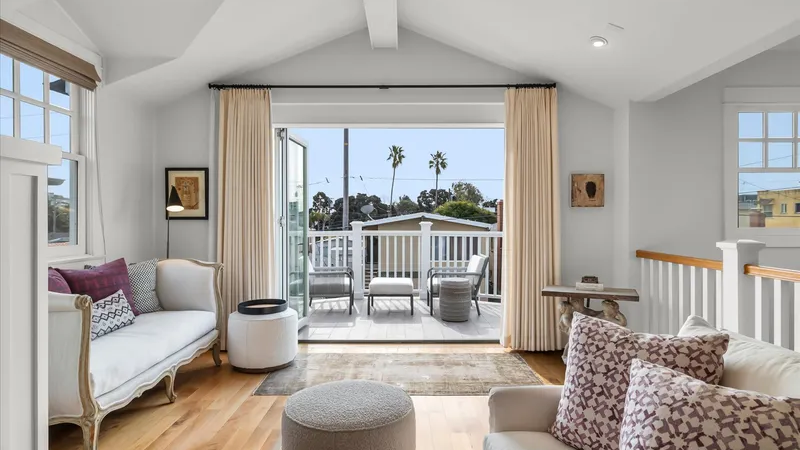
Strategic pricing advice to attract the right buyers and maximize value.
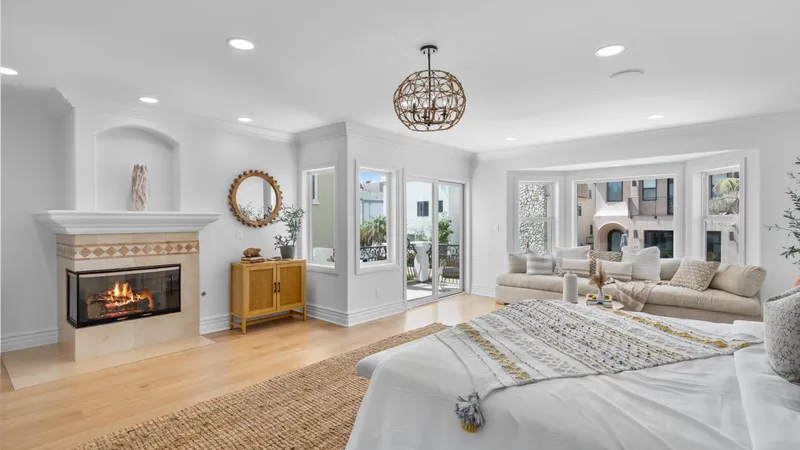
A comprehensive checklist to get your South Bay home market-ready.
From shifting market trends to the best of South Bay living—get the exclusive insights that help you buy smarter and live better in Manhattan and Hermosa Beach.