
Off-Market vs. On-Market: What Manhattan Beach Sellers Need to Know
Latest pricing trends and inventory analysis for Manhattan Beach.
A comprehensive checklist to get your South Bay home market-ready.
The difference between a Manhattan Beach home that sells in two weeks with multiple offers and one that sits for two months with a price reduction is almost never about the property itself. It’s almost always about preparation.
Buyers in this market are informed. They’ve been watching for months. They know what $4M looks like when it’s done right and what it looks like when someone tried to rush it to market. At the $3M–$10M tier, how you present your home affects your final number as directly as any other variable outside of location and lot.
Here’s how I walk sellers through the pre-listing process.
Before anything else, pull the City of Manhattan Beach’s Residential Property Records Report. It costs $299 and you can request it through the city at (310) 802-5505 or through the Community Development Department at manhattanbeach.gov.
This report documents the permit history on your property — what was pulled, what was finalized, and any open code enforcement activity. You want to know what’s in there before a buyer’s agent or inspector does. Surprises in escrow are expensive. Finding out in advance gives you options.
I’ve seen sellers discover unpermitted additions, open violations, or incomplete permit sign-offs for the first time after they’re already in contract. At that point you’re negotiating from a weak position. Pull the report early.
A voluntary pre-listing inspection is one of the smartest things you can do in this market — especially at the $5M+ tier. Here’s why:
Buyers at this level come in with their own inspector, often plus specialists — structural, sewer scope, mold. When a buyer’s inspector finds something you don’t know about, you’ve lost control of the narrative. You’re now reacting, not leading. Negotiation shifts in their favor.
When you already have a clean pre-listing inspection (or have addressed the issues it found), you’re in a completely different position. You can disclose proactively, demonstrate that the property has been cared for, and reduce the likelihood of a buyer using inspection findings as leverage for a price reduction.
A full inspection covers structure, roof, foundation, electrical, plumbing, HVAC, windows and doors, moisture, and drainage. In Manhattan Beach, inspectors should also be looking at coastal-specific failure modes — more on that below.
Living in a coastal environment is exceptional. It also means your home faces things that inland properties don’t. Buyers — and their inspectors — know this. Here are the items that come up most often in Manhattan Beach pre-listing inspections:
California requires sellers to disclose unpermitted work in the Transfer Disclosure Statement (TDS), which is required for all 1–4 unit residential sales. “As-is” sales do not exempt you from disclosure — you must disclose what you know. Failure to disclose is one of the most common causes of post-close litigation in California.
Common issues I see in Manhattan Beach:
Not every issue warrants repair. Some things are better disclosed cleanly and reflected in pricing than fixed poorly before listing. The decision depends on the nature of the issue, your timeline, and the price point.
As a general rule:
I’ll walk through this analysis with you during our pre-listing conversation. I’d rather spend an hour figuring out the right call on each item than have it surface as a negotiation issue after you’re in escrow.
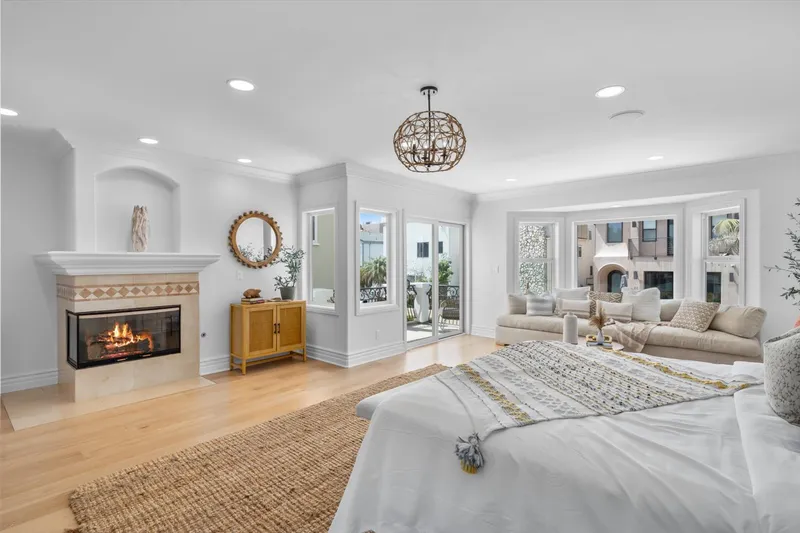
At the $3M–$10M tier, staging isn’t decoration. It’s part of what the buyer is purchasing — the vision of what their life looks like here. How a home is staged directly affects how long it takes to sell and what it sells for.
A comparable transaction in this market: an LA-area luxury home that received $88,000 in improvements and staging before listing was estimated just under $5M pre-work, listed at $5.7M, and sold for $5.85M. The ROI math works.
What I look for in staging at this level:
For reference: staging rental in this market typically runs $7,000–$9,000 for three months at the $3M–$5M tier, and $10,000–$12,000 for three months at $5M+. On a $4M sale, that’s a rounding error relative to what proper presentation can do to your final number.
At this price tier, remote buyers — relocating families, out-of-state buyers, international buyers — make initial decisions entirely based on digital presentation before they ever visit the property. Your photography and video are the first showing.
What’s expected at $3M+ (not a differentiator — a baseline):
At $8M–$10M+: Cinematic video with music and voiceover is increasingly standard, along with short-form social content (Instagram reels, YouTube). Remote and international buyers at this tier will watch a video walkthrough before boarding a plane.
South Bay providers I work with who specialize in this market include OttoVision 3D Scanning (MB-specific, Matterport + drone) and The HomeBird (authorized Matterport partner serving MB, HB, El Segundo). The photography on your listing is not where to cut costs.
Sellers often underestimate how long the prep phase takes. Here’s a realistic breakdown:
If you’re planning to list in spring — the most active buyer window in the Manhattan Beach market — you should be starting your prep in January or February at the latest. Spring listings that close in May–June catch peak buyer competition. Starting prep in April means listing in June, which is already past the peak activity window.
Every home is different. What needs to happen before your home lists depends on its age, condition, section, price point, and your timeline. I don’t run through a generic checklist — I walk through your property and tell you honestly what I think will move the needle and what won’t.
If you’re thinking about selling in 2026 — whether that’s spring, summer, or later — the conversation to have now is the prep conversation, not the listing conversation.
Cecilia Agraz | Bayside Real Estate Partners / Stroyke Properties Group
310-803-9338 | cecilia@manhattanhermosahomes.com
DRE #01974999
Also reading: How to Price Your Manhattan Beach Home | Off-Market vs. On-Market: What MB Sellers Need to Know | All Seller Resources
Latest pricing trends and inventory analysis for Manhattan Beach.
Latest pricing trends and inventory analysis for Manhattan Beach.
Latest pricing trends and inventory analysis for Manhattan Beach.
From shifting market trends to the best of South Bay living—get the exclusive insights that help you buy smarter and live better in Manhattan and Hermosa Beach.