
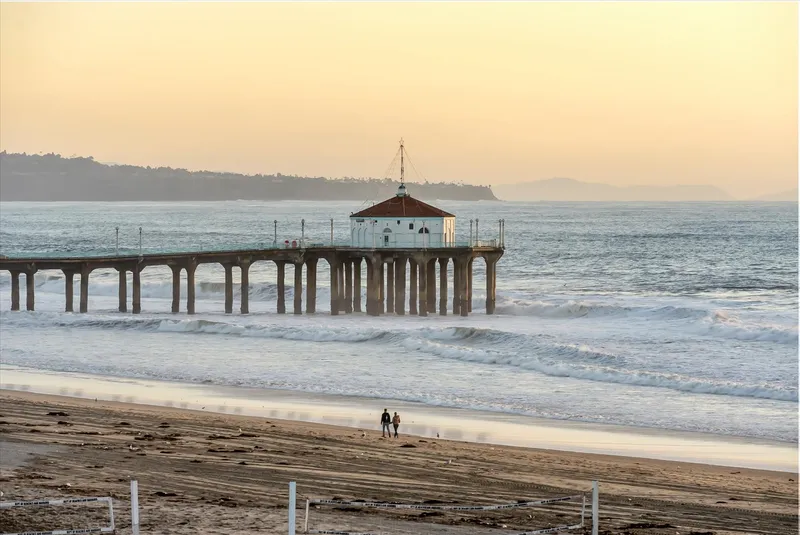
If you’ve ever visited Manhattan Beach, you’ve seen it. The Manhattan Beach Pier stretches 928 feet out over the Pacific, capped by the distinctive octagonal Roundhouse at the end — one of the most recognizable silhouettes on the Southern California coast. Sunsets here are genuinely stunning. But this pier is more than a backdrop. It’s the literal and symbolic heart of the community, and it has been for over a hundred years.
I’ve walked this pier more times than I can count — early mornings before the crowds, summer evenings when the whole town seems to gather at the end of Manhattan Beach Boulevard. If you’re considering moving here, this is the kind of thing I want you to understand about Manhattan Beach: daily life has real texture. The pier is part of it.
A Brief History of the Pier
Manhattan Beach has had piers since 1901, when two wooden structures were built — one at Center Street (now Manhattan Beach Boulevard) and one at Marine Avenue, known as Peck’s Pier and Pavilion. The Center Street pier stretched 900 feet before a major storm destroyed it in 1913.
The current pier was constructed between 1917 and 1920, dedicated on July 5, 1920. It’s a concrete structure — and not just any concrete pier. The Manhattan Beach Pier is the oldest standing concrete pier on the West Coast. The engineer, A.L. Harris, designed the circular end specifically to reduce wave damage to the pilings. That octagonal building at the end, which now houses the Roundhouse Aquarium, was completed in 1922.
By the late 1980s, the pier had deteriorated significantly — aging concrete, decay, and at least one jogger injured by falling debris. The city undertook a full restoration in the early 1990s, preserving the original 1920s appearance. The pier was re-dedicated in 1992. In 1995, it was designated a California State Historic Landmark.
Most recently, in May 2025, the city unveiled a brand-new aluminum railing system — the first railing replacement in 35 years. The new rails are the same iconic sea foam green, but aluminum instead of steel, so they won’t corrode in the salt air. The $1.8 million project also brought the railing up to current building code and ADA standards. They’re built to last another 25–30 years.
The Roundhouse Marine Studies Lab and Aquarium
The building at the end of the pier isn’t a restaurant or a gift shop — it’s an aquarium run by California State University Dominguez Hills. The Roundhouse Marine Studies Lab and Aquarium has been educating visitors about Southern California’s marine ecosystem for decades, and it sees over 300,000 guests a year. For a free attraction, it punches well above its weight.
Inside you’ll find more than 75 species of sea life: moon jellies, baby sharks, octopus, moray eels, sheephead, garibaldi, seahorses, lobsters, and round rays. There’s a wrap-around touch tank where you can handle sea stars, sea urchins, sea cucumbers, and sea snails. The tide pool exhibits recreate the Southern California intertidal habitat. It’s genuinely engaging for kids and adults alike.
The Roundhouse also runs school programs and marine science education — it’s a working teaching lab, not just a display space.
Roundhouse Aquarium Hours and Admission
- Monday–Friday: 2:00 PM – 5:00 PM
- Saturday–Sunday: 10:00 AM – 5:00 PM
- Admission: Free (suggested donation: $5 per person, $10 per family, $20 per group)
- Address: 2 Manhattan Beach Blvd (end of the pier)
- Phone: (310) 379-8117
Note: Hours can shift due to weather, pier closures, or private events. Check their social media before making a special trip.
Fishing at the Manhattan Beach Pier
The pier has always been a fishing spot, and it still draws regulars who know what they’re doing. The good news: you don’t need a California fishing license to fish from a public pier. All other regulations still apply — size limits, bag limits, seasons — but the license requirement is waived for pier anglers.
Common catches at Manhattan Beach Pier include corbina, jacksmelt, bonito, mackerel, yellowfin croaker, thornback guitarfish, and Pacific shovelnose guitarfish. The pier’s position over open water gives you access to species you wouldn’t find in shallower nearshore spots.
There are some specific rules worth knowing. Anglers are limited to two rods per person. Because of white sharks in the area, the city prohibits metal leader lines and excessively large hooks. Chumming the water is not allowed, and you can’t cast overhead directly into the surf zone. These rules are enforced, so read them before you set up.
Events at and Near the Pier
The pier is the anchor for some of Manhattan Beach’s best annual events. If you live here, these become part of your rhythm.
International Surf Festival
Running since 1962, the International Surf Festival takes place each summer across Manhattan Beach, Hermosa Beach, Redondo Beach, and Torrance. In 2026 it runs July 27 – August 2. The signature events include the Dwight Crum Pier-to-Pier Swim (a 2-mile open water race from Hermosa Pier to Manhattan Beach Pier) and the Charlie Saikley 6-Man Beach Volleyball Tournament, held on the south side of the Manhattan Beach Pier on July 31–August 1. The 6-Man draws a mix of elite players and serious amateurs — it’s one of the most entertaining weekends of the summer.
Manhattan Beach Open (AVP)
Every summer, the south side of the pier becomes one of the most storied courts in beach volleyball. The Manhattan Beach Open has been part of the AVP’s season since 1984. For anyone who follows the sport — or wants to understand why this town’s DNA includes volleyball — watching a few matches on this court is essential.
Holiday Fireworks
The city’s annual fireworks show fires over the pier each December (scheduled for December 13, 2026). It’s one of those nights when the whole town comes out. The combination of holiday lights, pier backdrop, and fireworks over the water is something you don’t forget.
Pier Lighting
The pier lighting ceremony kicks off the holiday season in November (scheduled for November 18, 2026, 6:00–9:00 PM), with music, shopping, and dining in the downtown area.
Concerts in the Park
While held at Polliwog Park Amphitheater (not the pier itself), the city’s Concerts in the Park series runs July 5, 12, 19, and 26 from 5:00–7:00 PM. It’s a short drive or bike ride from the pier and part of the same summer community rhythm.
Parking Near the Manhattan Beach Pier
Parking near the pier is metered and enforced 24 hours a day — unlike most of downtown, where enforcement stops at 9:00 PM. Here’s what to know:
- Lower Pier Lot: 68 spaces, entrance at the end of Manhattan Beach Boulevard. $2.50/hour, 5-hour limit. ADA-accessible.
- Upper Pier Lots: 50 spaces, entrance on Ocean Drive. $2.50/hour, 5-hour limit. ADA-accessible.
- Downtown lots (Lots 1 & 2): $2.00/hour, 2-hour limit, entrances off Bayview Drive. Walking distance to the pier.
- Metlox Underground Structure (Lot 9): 450 spaces with EV charging, multiple time limit options. Good for longer stays and dinner after a pier visit.
The city runs 12 parking lots and over 300 street meters in the downtown district. Summer weekends and event days fill up fast — arrive before 10:00 AM on a busy Saturday or plan to circle a few blocks. Locals often bike or walk to the pier specifically to avoid the parking situation.
Dining Near the Pier
Manhattan Beach Boulevard, which dead-ends at the pier, is lined with restaurants and the broader downtown district sits just a few blocks up. You won’t struggle to find a meal here. A few worth knowing:
- The Strand House — steps from the pier, ocean views, New American cuisine. One of the nicer dinner options in the immediate area.
- Rock’N Fish — right up from the pier in the heart of downtown, known for fresh seafood, prime steaks, and a solid happy hour.
- Love & Salt — Italian-inspired, steps from the pier. Consistently good and popular with locals.
- Mangiamo — traditional Italian, one block from the pier. A longtime neighborhood staple.
Beyond these, Downtown Manhattan Beach has dozens of casual and upscale options — tacos, sushi, burgers, pizza, and more — all within easy walking distance once you’ve parked.
The Strand and Beach Access
The pier sits at the midpoint of Manhattan Beach’s Strand — the paved path that runs the entire length of the city’s beachfront. From the pier entrance, you can walk or bike north toward El Porto or south toward Hermosa Beach without leaving the Strand. It connects directly to the Hermosa Beach Strand, which then connects to Redondo Beach, making it part of one of the best continuous beachfront paths in Southern California.
The beach on both sides of the pier is wide, sandy, and lined with volleyball courts. The south side of the pier, in particular, is where you’ll find the courts used for the AVP Open and the Charlie Saikley tournament. On any given weekend, you’ll see competitive players and pickup games running simultaneously.
Why the Pier Matters to Buyers
I’m not going to oversell this, but I’d be leaving something out if I didn’t say it plainly: the pier is one of the reasons people choose Manhattan Beach over other coastal cities. It’s the kind of community anchor that changes how you experience daily life. Clients who’ve relocated from landlocked cities, or from coastal markets without this kind of public infrastructure, often mention the pier specifically in the first months after moving here. You can walk to it. It belongs to everyone. And it’s genuinely beautiful.
Homes within a few blocks of the pier — particularly in the Sand Section — are priced accordingly. But even if you’re buying further from the water, this is part of what you’re buying into.
If you’re thinking about making a move to Manhattan Beach or Hermosa Beach and want to understand what day-to-day life actually looks like, I’m happy to walk you through it — including the neighborhoods closest to the pier. Reach out any time.
Cecilia Agraz
Bayside Real Estate Partners / Stroyke Properties Group
DRE: 01974999
(310) 803-9338
cecilia@manhattanhermosahomes.com
Also Worth Reading
- Manhattan Beach Sand Section: A Complete Neighborhood Guide
- Moving to Manhattan Beach: Everything You Need to Know
- Downtown Manhattan Beach: The Neighborhood Guide
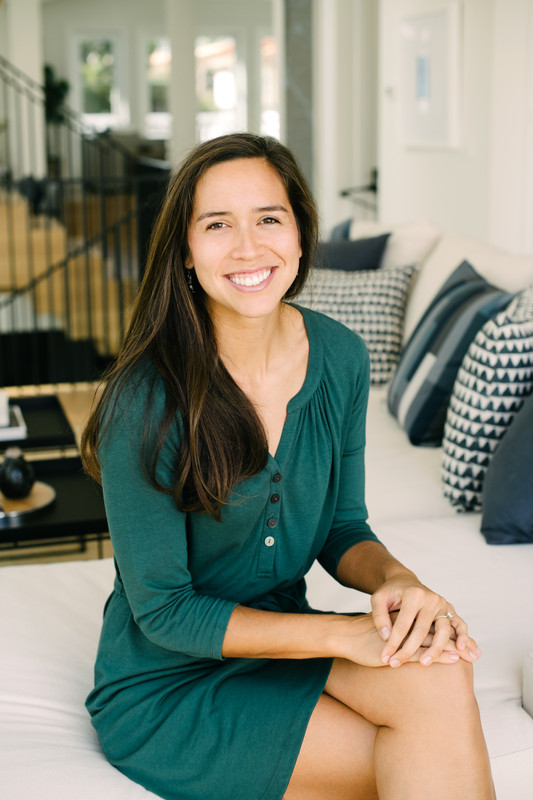
Cecilia Agraz
South Bay neighbor and Realtor® focused on clear guidance and low‑stress moves in Manhattan Beach & Hermosa Beach.