
By Cecilia Agraz, Associate Broker, Stroyke Properties Group at Bayside Real Estate Partners.
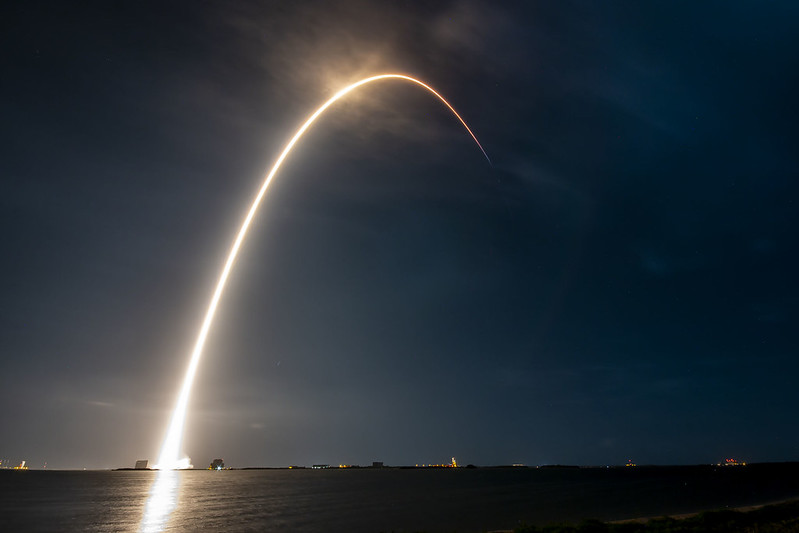
SpaceX opened public trading on June 12, 2026 at a valuation of $1.77 trillion, closing its first day at $153.23 per share against a $135 IPO price. For the South Bay, this is one of the largest single equity events the region has seen in years. The Hawthorne campus is 15 to 20 minutes from Manhattan Beach, which means a large slice of the SpaceX employee base lives and works right alongside the market they’re about to start shopping.
Below is a working read on what that means for the South Bay market: the timing, the neighborhoods that will feel it most, and what a buyer in this environment should know before they start.
The timing: the wave has started, but the peak is early 2027
The numbers. Per publicly reported figures around the IPO, about 4,000 current and former SpaceX employees are expected to become millionaires from the offering, with 400 of them at $100 million or more. SpaceX has historically favored equity over cash in compensation, so the wave reaches beyond executives and engineers into non-technical and long-tenured staff.
The IPO was one event. The buying wave is not. Most SpaceX equity holders face a standard lockup that runs through December 2026, with limited batches releasing before then. UCLA lecturer and real estate expert Paul Habibi told the LA Times in July 2026 that he expects the biggest housing impact in early 2027, once the lockup fully expires. Some pre-lockup liquidity is already showing up in buyer inquiries, and some private bankers are helping employees borrow against future gains in the meantime.
What this actually means for South Bay real estate
Here’s what I’d expect the wave to do to the South Bay market over the next 12 to 18 months, based on what I’m seeing in the data and hearing across the broker network:
Upward pressure on prices in the $3M to $10M tier. This is where SpaceX buyer demand will land first. Manhattan Beach Sand and Tree Sections, East Manhattan Beach (Mira Costa Section), and Hermosa’s Sand Section and Valley all fit the commute math from Hawthorne. If enough of the 4,000 new millionaires start shopping in this range and inventory doesn’t grow to meet them, medians in these neighborhoods drift up.
Tighter inventory. South Bay inventory was already tight through H1 2026, with low days-on-market and a lot of activity closing off-market. New SpaceX demand adds to a market that’s already supply-constrained. Manhattan Beach’s small coastal footprint doesn’t leave room to scale up housing the way an inland market can. For scale, Manhattan Beach has roughly 11,000 housing units in total. A few thousand newly liquid buyers looking at a city that size is a different kind of pressure than the same demand spread across an inland market.
More off-market activity, not less. When demand outstrips supply, sellers gain more control, and more of them will choose to sell privately because they can reach serious, qualified buyers without ever going public. My own tracking of Manhattan Beach sales above $12M shows roughly one in three closing off market, and I would expect that number to hold or grow. More on where that figure comes from below.
Faster transaction cycles. A wave of pre-approved cash-heavy buyers means faster closings, shorter contingency periods, and less negotiation room. Sellers who dragged their feet in a slower market will get pushed to close in 20 to 30 days rather than 45 to 60.
Neighborhood spillover to Hermosa Beach and Redondo Beach. Habibi told the LA Times he expects the largest concentration of SpaceX-driven purchases in Manhattan Beach and Redondo Beach, with spillover into Culver City and north Orange County. Hermosa Beach, which generally prices below comparable Manhattan Beach inventory, will likely see spillover from aerospace buyers who want the coastal Beach Cities lifestyle without the Manhattan Beach premium.
Snap is the closest analog. It went public in March 2017 at a $24 billion valuation. Snap’s workforce was clustered on the Westside, and the housing impact hit Venice and Santa Monica fast. What Snap did to those markets in 2017 is what SpaceX may do to the South Bay in 2027, but larger. SpaceX’s IPO valuation is about 74 times Snap’s, and its workforce is south of LAX rather than west of it.
Why the South Bay is the natural destination
The SpaceX Hawthorne campus is 15 to 20 minutes from downtown Manhattan Beach. From Hermosa Beach it’s 20 to 30. Compare that to a Santa Monica commute (30 to 45 minutes in traffic), and the Westside generally trades a longer commute for a higher entry price.
The Beach Cities also offer what the Westside doesn’t typically have at the same price point. A coastal town feel, a working downtown that doesn’t depend on tourism, and school districts that consistently rank among the strongest in California. Manhattan Beach Unified is widely considered one of the top public districts in the state. Mira Costa High School consistently sends students to Stanford, the UCs, and the Ivies. Hermosa Beach has its own three-school district, and most Hermosa families elect Mira Costa for high school, though the exact percentage varies by year.
For an engineering family with a school-age kid and a Hawthorne commute, the math usually works out for Manhattan Beach, Hermosa Beach, or East Manhattan Beach.
What SpaceX buyers face on the way in
Three friction points tend to come up on the buyer side of aerospace transactions, based on what I’ve observed working the seller side of deals where the buyers were aerospace employees, and what colleagues across the network describe:
1. The lender problem. RSUs (Restricted Stock Units), pre-IPO equity-backed mortgages, and recently liquid stock positions aren’t what most originators handle every day. The documentation can trip up an originator who hasn’t seen it before, and stall a deal for weeks while underwriting figures out how to size the loan. The right lender relationship changes what you can qualify for.
2. The tax timing question. When and how a buyer monetizes equity carries tax implications worth understanding. QSBS Section 1202 exclusion planning, secondary tender offer structuring, ISO/NSO exercise timing, and post-IPO concentration management can change what’s possible to purchase and what it costs after tax. I’m not a CPA and won’t pretend to be one. If you’d like recommendations on CPAs and lenders who work in this space, I can point you toward the ones I’m building relationships with.
3. The inventory problem. The most desirable South Bay properties tend not to sit on the public market.
The off-market reality
From my own tracker of Manhattan Beach single-family transactions above $12M closed between August 2022 and May 2026 (about four years): 29 total sales in that window, and 9 of those were never advertised for sale online. About one in three of the highest-end inventory in this city never appeared on Zillow or on the public MLS. At the very top of the market ($20M and up), 4 sales closed in the same window, and 2 of those were also never advertised online. That is a small sample, but it points the same direction: at the very top of the Manhattan Beach market, a sale may never enter the public market at all.
Why sellers at the top keep listings quiet:
- They don’t want lookyloos in their home. Serious, qualified buyers only.
- They don’t want public open houses. Foot traffic and opening the door to strangers is not what they signed up for.
- They don’t want to be disturbed while they’re still living in the property.
- They don’t want their neighbors in their business. A sign in the yard and a broker’s website full of interior photos is not for everyone.
- They don’t want the attention. Privacy is worth a lot at this tier.
- Price testing without a days-on-market clock. A property that sits publicly for 90+ days takes a perception hit.
The practical effect for a buyer: without a broker actively working the off-market network, a chunk of the most desirable inventory in the South Bay just doesn’t exist for you. Off-market properties are still marketed, just to a narrower group of brokers and pre-qualified buyers rather than to the MLS.
What equity buys at each tier
2025 calendar year annual medians by neighborhood, from MLS data analyzed in April 2026:
- Sand Section (Manhattan Beach): $3.7M 2025 median. Walk to the beach, walk to downtown. The Walk Streets sit in the upper end of this tier.
- Tree Section (Manhattan Beach): $3.4M 2025 median. Family-oriented, close to MBUSD elementary schools and Mira Costa.
- Hill Section (Manhattan Beach): $6.32M 2025 median. Larger lots on the front side of the hill, ocean views, the luxury tier of MB outside the Strand.
- Mira Costa Section (East MB): $3.05M 2025 median. Walk to Mira Costa High. Families prioritizing walk to Mira Costa plus more house for the money.
- Hermosa Beach: runs 15 to 25% below comparable Manhattan Beach inventory. Different vibe from MB: more laid-back, more beach-town identity, Pier Plaza and Strand and volleyball at every hour of the day. Same coastal Beach Cities lifestyle at a lower price.
The Strand is in its own tier. Recent Strand sales have reached into the $20M+ category, with new construction on prime stretches pushing higher.
If you’re thinking about a South Bay purchase
You can reach me at cecilia@manhattanhermosahomes.com or 310-803-9338. Happy to walk through neighborhoods on a call, or just answer questions if you’re early in the process. No obligation and no follow-up unless you ask.
Congratulations to everyone at SpaceX. It’s been a long road, and the team has earned it.
Cecilia Agraz is an Associate Broker on the Stroyke Properties Group team at Bayside Real Estate Partners. She has worked the Manhattan Beach and Hermosa Beach market for over a decade, and is fluent in Spanish. She is also a competitive beach volleyball player who has played on the AVP tour.
Cecilia Agraz
South Bay neighbor and Realtor® focused on clear guidance and low‑stress moves in Manhattan Beach & Hermosa Beach.